Stripe Webhook Documentation Review: What They Get Right
An objective analysis of Stripe's webhook documentation - examining their structure, code examples, security guidance, and what other companies can learn from the industry leader.
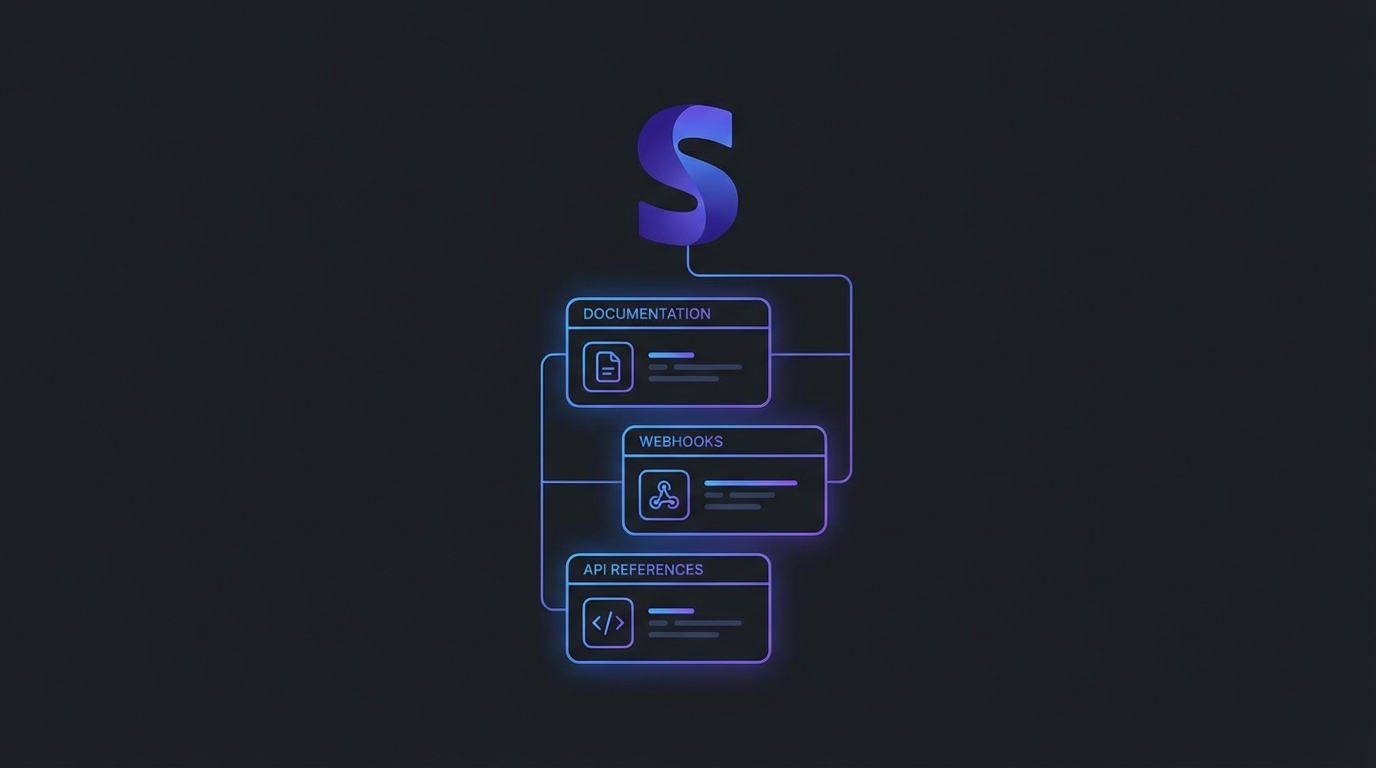
Reviewing Stripe's Webhook Documentation: What They Get Right
Stripe's documentation is the gold standard in the API world. Their webhook documentation is no exception. There's much to learn from how they approach this critical developer infrastructure. For hands-on implementation, see receiving Stripe webhooks reliably.
Review Methodology
Six dimensions evaluated: Structure/Navigation, Code Examples, Security Guidance, Testing Tools, Event Catalog, Troubleshooting (1-5 scale).
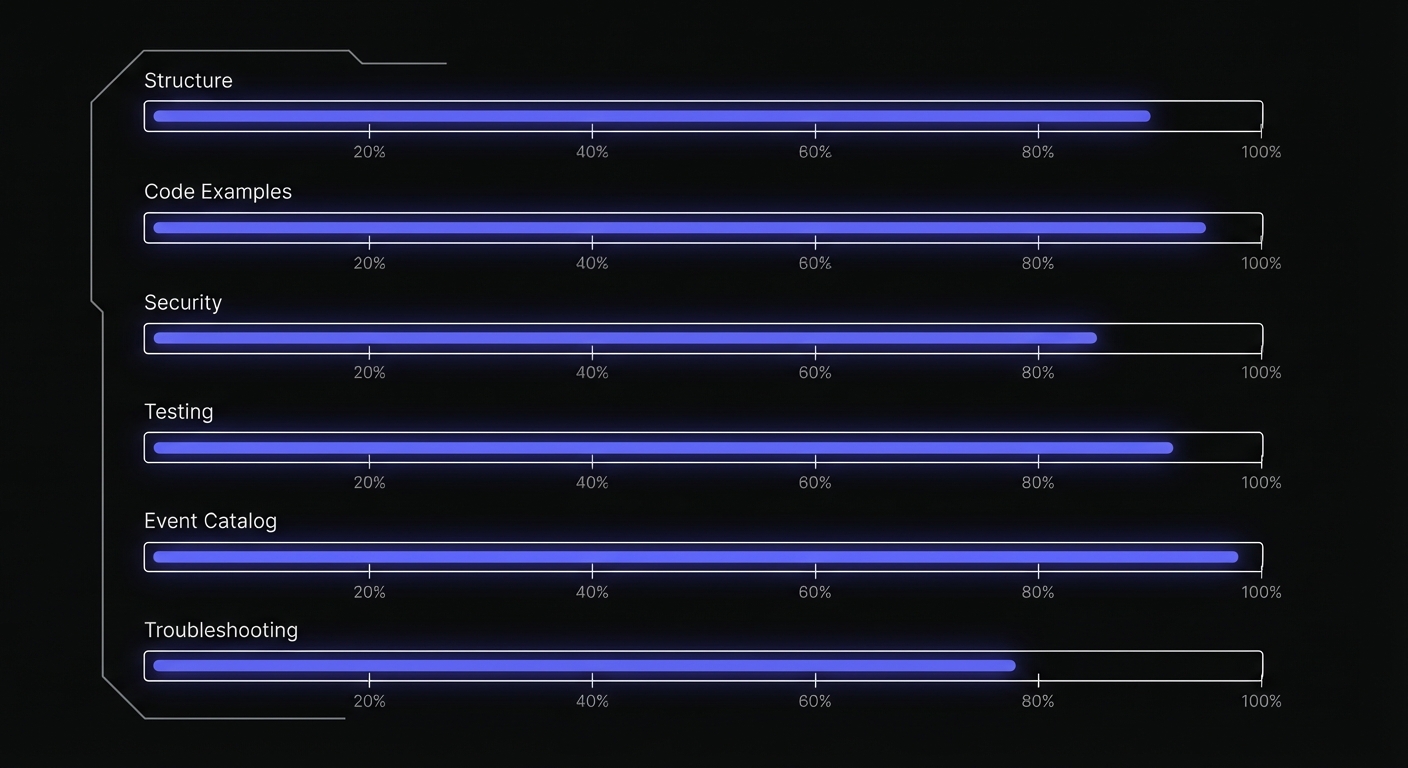
Structure and Navigation — 5/5
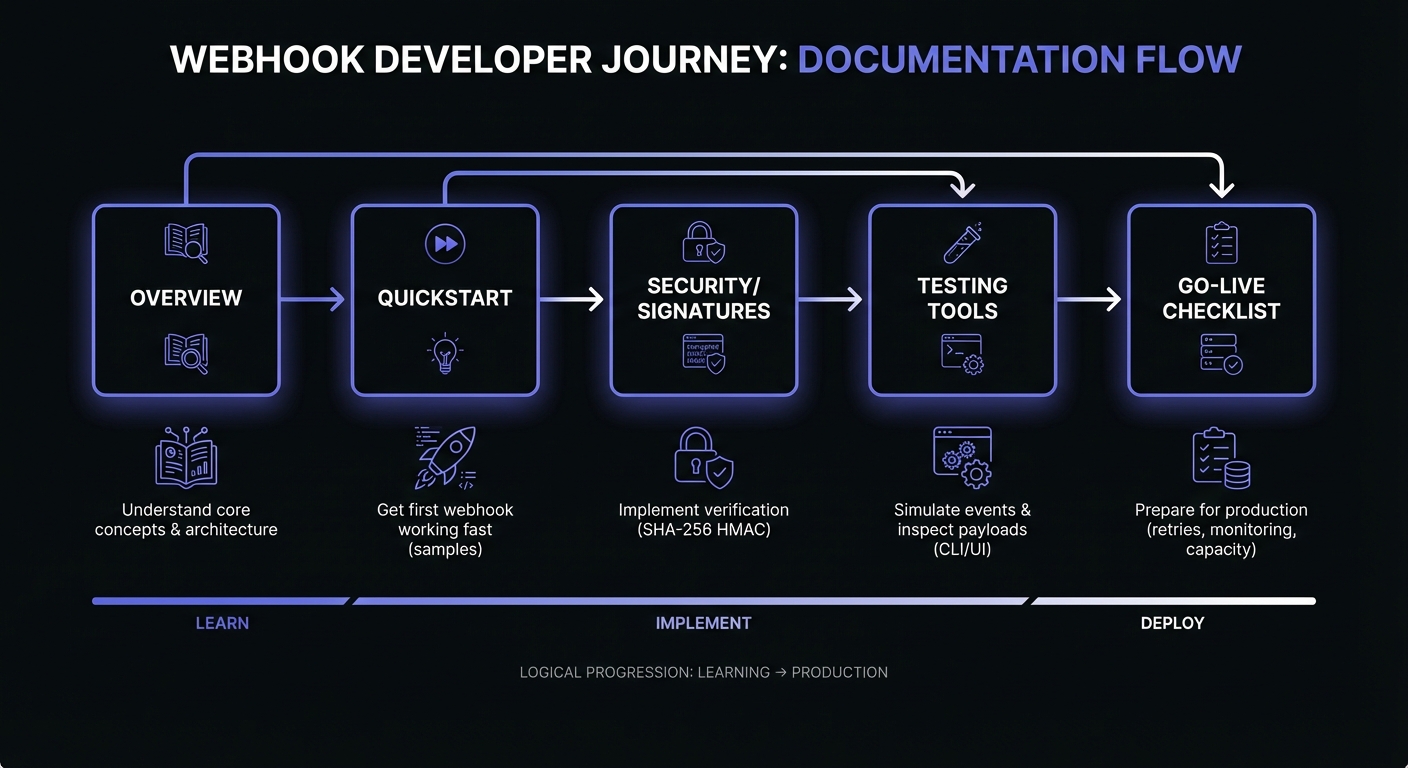
Stripe's docs follow logical progression mirroring developer journey. Opening paragraph defines webhooks, explains purpose, provides examples. Sidebar breaks content into digestible sections: Overview, quickstart, endpoints, signatures, best practices, go-live checklist. Each builds on previous, creating natural learning path.
Standout: "Go live checklist" transforms reference material into actionable guidance for production preparation.
Code Examples — 5/5
Stripe provides production-ready code examples in multiple languages (Ruby, Python, PHP, Java, Node.js, Go, .NET). Each follows the same structure, making logic easy to understand regardless of language. Examples include error handling, not just happy paths—crucial for webhook implementations with network issues and timing problems.
Standout: Complete context around snippets: imports, error handling, response patterns. Reduces "works in docs, breaks in production" problems.
Security Guidance — 5/5
Stripe dedicates a full section to webhook signatures with "what" and "why." They explain HMAC-SHA256 scheme: signature construction, timestamp validation preventing replay attacks (5-minute default window), key rotation handling. Stripe explains attack vectors you're protecting against—helping developers understand security, not blindly copy code.
Standout: Key rotation guidance explains the multi-secret transition period. Many companies skip this, leaving developers guessing about downtime-free rotation.
Testing Tools — 4/5
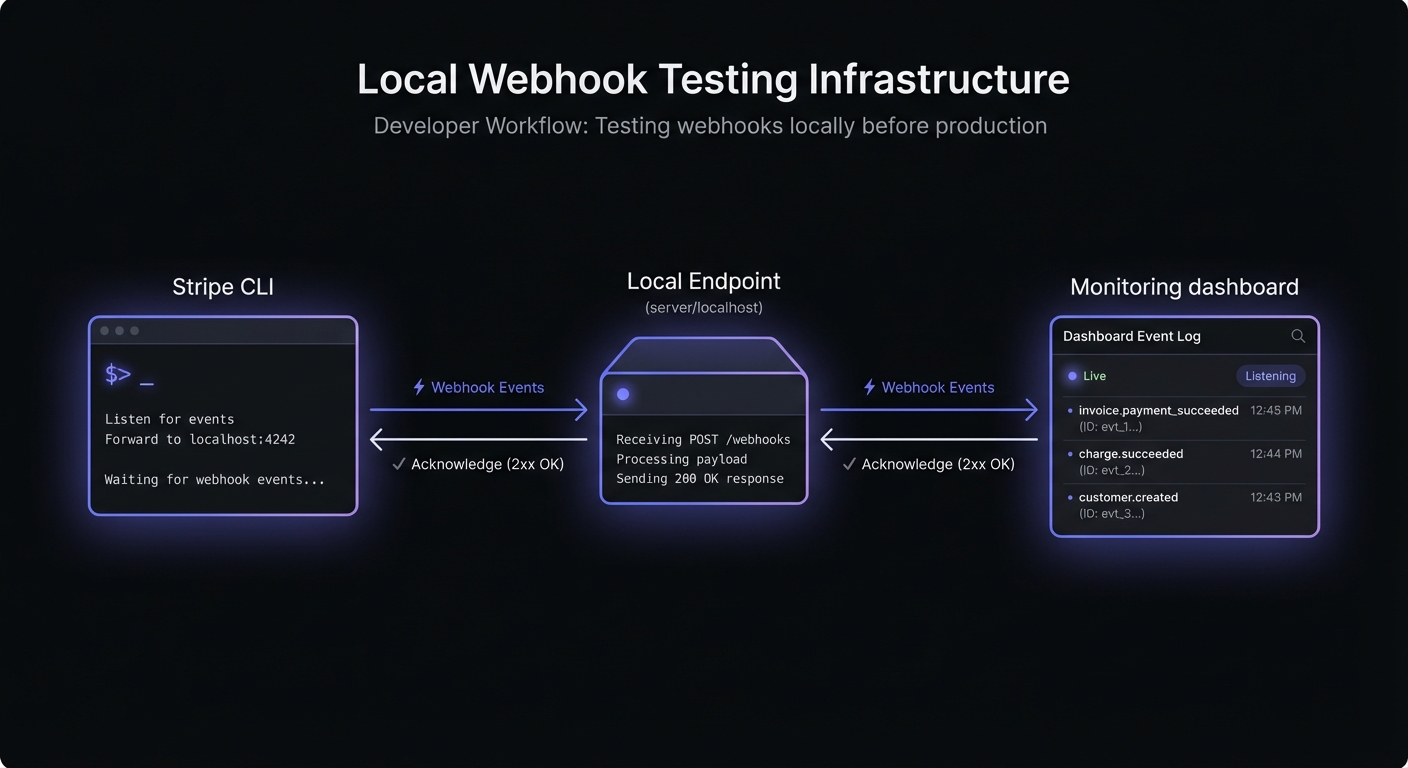
Stripe CLI enables local development with webhook forwarding (stripe listen --forward-to localhost:4242/webhook) and event triggering (stripe trigger payment_intent.succeeded). Dashboard webhook event log shows deliveries, response codes, resend capability—invaluable for debugging.
Gap: Documentation could address integration testing strategies and CI/CD webhook simulation.
Standout: Event log shows exact payloads sent and endpoint responses—eliminates guesswork debugging.
Event Catalog — 5/5
Events grouped by resource type (charges, customers, invoices). Each includes: when it fires, event structure, related events to handle, API resource links. 200+ event types documented consistently. State-change vs. informational events distinguished.
Standout: "Related events" prevents missing event families. Payment example shows payment_intent.succeeded links to payment_intent.payment_failed and payment_intent.canceled.
Troubleshooting — 4/5
Covers: duplicate handling (idempotency), out-of-order delivery, 20-second timeout, automatic retries. Retry schedule explained clearly: 3 days with exponential backoff.
Gap: Content scattered across pages. Dedicated troubleshooting/FAQ would help quick diagnosis.
Standout: Explicit 20-second timeout prevents common production issues where handlers do too much synchronous work.
Overall Scorecard
| Category | Score |
|---|---|
| Structure and Navigation | 5/5 |
| Code Examples | 5/5 |
| Security Guidance | 5/5 |
| Testing Tools | 4/5 |
| Event Catalog | 5/5 |
| Troubleshooting | 4/5 |
| Overall | 28/30 |
Key Takeaways
Lead with "why": Context makes documentation memorable before implementation details.
Production-ready examples: Error handling, imports, security. Copy-paste to production must work.
Security first: Signature verification is standard path, not advanced section. See webhook security best practices.
Full lifecycle: Retry behavior, timeouts, failures—not just happy paths.
Logical organization: Group by resource, show event relationships, explicit payloads.
Testing tools: Local development CLI and event logs improve developer experience.
Conclusion
Stripe's webhook documentation sets the standard. Clear structure, comprehensive examples, security-first approach, and testing tools create an exceptional experience. Minor gaps: testing guidance and consolidated troubleshooting. Study their patterns and adapt to your context.
If implementing webhooks for your platform, bookmark Stripe's docs. For building your product focus instead of infrastructure, use a managed service.
Related Posts
How to Receive Stripe Webhooks Reliably
A comprehensive guide to setting up, verifying, and handling Stripe webhooks in production. Learn best practices for idempotency, event ordering, and building reliable webhook endpoints with Node.js and Python examples.
HMAC-SHA256 Webhook Signatures: Implementation Guide
Learn how to implement secure webhook signature verification using HMAC-SHA256. Complete guide with code examples for signing and verifying webhook payloads in Node.js and Python.
Webhook Idempotency: Why It Matters and How to Implement It
A comprehensive technical guide to implementing idempotency for webhooks. Learn about idempotency keys, deduplication strategies, and implementation patterns with Node.js and Python code examples.
Webhook Security Best Practices: The Complete Guide
Learn how to secure your webhook implementations with HMAC signature verification, replay attack prevention, SSRF mitigation, and more. Includes code examples in Node.js and Python.
Webhook Retry Strategies: Linear vs Exponential Backoff
A technical deep-dive into webhook retry strategies, comparing linear and exponential backoff approaches, with code examples and best practices for building reliable webhook delivery systems.